
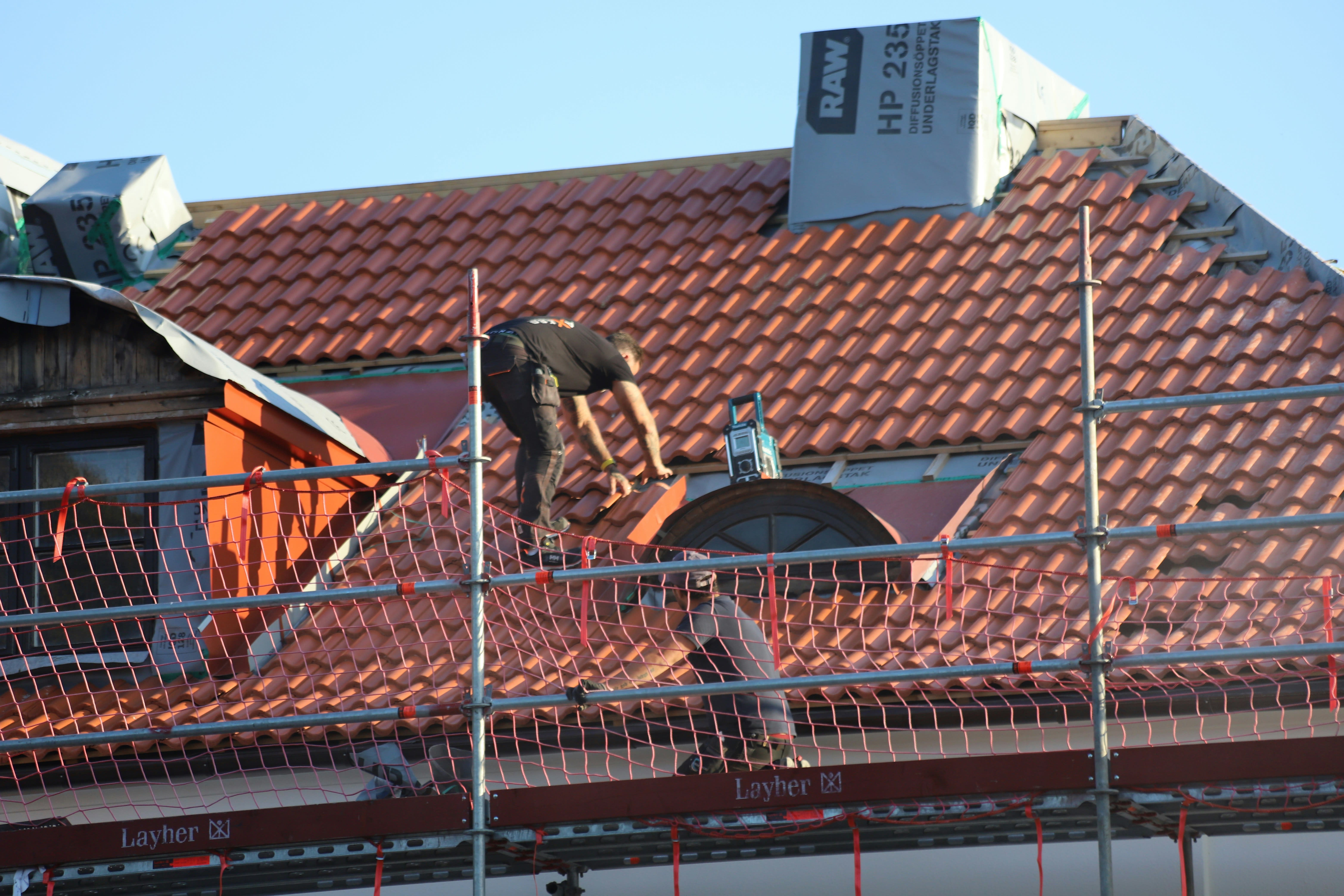
Do you have to replace an old roof to sell a house in Florida?
No, Florida doesn't require a new roof to sell, but roof age is often the single biggest factor in whether a Clermont home sells at all. If the roof is old enough that no insurer will write a policy on it, a financed buyer can't get the loan to close. That leaves you three real choices: replace the roof before listing, offer the buyer a closing credit, or sell as-is to a cash buyer who doesn't need insurance. Which one nets you the most depends on your roof's age, your cash, and your timeline.
By Amber Welch | July 15, 2026
Here's the conversation I have with almost every Clermont seller who's owned their home for more than a decade: the roof looks fine from the driveway, it doesn't leak, and they assume it's a non-issue. In Florida, that assumption can cost you a sale.
Your roof isn't just a condition item here. It's an insurance question. And in Florida, insurance is the hinge the whole deal swings on.
Why an old roof can stop the sale, not just lower the price
In most of the country, an aging roof is a negotiating point. In Florida, it's a gatekeeper.
Many Florida insurers won't write a new policy on an asphalt shingle roof past roughly 15 to 20 years, and around 25 years is a hard ceiling for most carriers. That matters because a buyer using a mortgage has to secure a homeowners insurance binder before the lender will fund. No binder, no loan. No loan, no closing. So when people say roof age is the most important factor in a Florida sale, this is why: an uninsurable roof doesn't just shave your price, it can end the deal entirely.
Florida law does give homeowners real protection here, and it's worth knowing before you panic or overspend. Under Florida Statute 627.7011:
- Roof under 15 years: An insurer can't refuse to write or renew a policy solely because of the roof's age.
- Roof 15 years or older: You have the right to pay for an inspection by an authorized inspector, and if it shows at least 5 years of remaining useful life, the insurer can't drop or deny you based on age alone.
- Around 25 years: Most carriers treat this as the end of the road for a standard policy, and options narrow fast.
There's good news in 2026 too. The Florida insurance market has softened, several carriers have re-entered the state, and some have loosened underwriting. A few will now write an older roof with an actual cash value (ACV) endorsement, meaning they cover the roof at its depreciated value rather than full replacement cost. That's a middle path that barely existed a couple of years ago, and it can be the difference between a buyer getting a binder and walking away. A pending state change also strengthens protections for steep-slope roofs 15 years and older on policies issued or renewed on or after July 1, 2026.
The point isn't to memorize the statute. It's this: an old roof doesn't automatically mean an uninsurable house. Sometimes a $150 inspection showing five years of life left is all that stands between your listing and a clean closing.
Your three options: replace, credit, or sell as-is
Once you know where your roof stands, the decision usually comes down to one of three paths.
1. Replace the roof before you list. This removes the insurance risk and the appraisal risk completely, and it opens your home to every buyer, including FHA and VA borrowers whose lenders are strictest about roof condition. The trade-off is cost. A roof replacement in Central Florida runs roughly $11,000 to $30,000, with around $25,000 being typical for a standard asphalt shingle roof on an average Clermont home. You won't get every dollar back in sale price, replacing a roof recovers somewhere around 60 to 70 percent of its cost directly, but the real return is avoiding a collapsed deal, a low appraisal, or being negotiated down by far more than the roof would have cost.
2. Offer a closing credit. Here you leave the roof as it is and give the buyer money at closing to replace it themselves. This keeps the big check out of your pocket and lets the buyer choose their own contractor and color. The catch is timing: the buyer still has to get an insurance binder to close, so a credit works best when a carrier will bind the current roof, often at actual cash value, long enough to get through closing. If no one will insure it at all, a credit alone won't save the deal. This is the same logic that governs repairs and credits after a home inspection, and any credit has to be in a signed addendum, not a verbal promise at the closing table.
3. Sell as-is. Selling as-is is legal and common in Florida, and it can make sense if you can't or won't put money into the roof. But understand what it usually means for your bottom line. The buyers who purchase a truly uninsurable roof are most often cash and investor buyers, and the deepest as-is cash offers commonly land 30 to 50 percent below full market value. That's a steep price for convenience. Before you take one of those "we'll take your old roof off your hands" offers, you want to know your real number, which is exactly the math I walk sellers through when we compare an iBuyer or cash offer against listing on the open market.
One thing as-is does not do: erase your disclosure duty. Under Florida's Seller's Property Disclosure obligations and the Johnson v. Davis standard, you must disclose known defects that materially affect value and aren't obvious to a buyer. An as-is clause limits your obligation to make repairs. It does not let you hide a known leak or storm damage. Selling as-is means "I won't fix it," not "I won't tell you."
What this looks like in Clermont's 2026 market
Clermont is a balanced market right now. The median sale price sits around $450,000, there are close to 795 homes for sale, homes are taking about 72 days to sell, and sellers are netting roughly 98 percent of their asking price. In a market like this, condition matters more than it did during the frenzy years. Buyers have choices, and they'll pass on, or pick apart, a home with a question mark over the roof.
That's the argument for handling the roof on your terms, before a buyer's inspector and insurance agent handle it for you. When a roof issue surfaces during the buyer's inspection period, you're negotiating from the back foot, on the buyer's clock, with the buyer holding the right to walk. When you know the roof's status before you list, you control the story.
A couple of local notes. If you're selling out in South Lake, Groveland, Mascotte, or Howey-in-the-Hills, older roofs and manufactured homes are common, and rural properties can have fewer insurance options to begin with, so the roof-plus-insurance question gets even more important. And roof age ties directly into a buyer's ability to close, which is why I cover it alongside the rest of Florida's homeowners insurance hurdles so my sellers understand exactly what their buyer is up against.
Here's what I tell every seller who asks me this: don't spend $25,000 on a roof until you know you need to, and don't hand a cash buyer a lowball discount until you know your real number. The right move is different for a 12-year-old roof with plenty of life left than it is for a 27-year-old roof no carrier will touch. The only way to know which one you have, and which path nets you the most, is to look at the roof, the comps, and your insurance options together.
Frequently Asked Questions
Do I have to replace my roof to sell my house in Florida?
No. Florida doesn't require a roof replacement to sell, and no law forces you to put on a new roof. But if the roof is old enough that a buyer's insurer won't write a policy, a financed buyer can't close, so you'll usually need to either replace it, offer a credit so the buyer can replace it, or sell to a cash buyer who doesn't need insurance to close.
How old is too old for a roof to get homeowners insurance in Florida?
Many Florida carriers won't write a new policy on an asphalt shingle roof past roughly 15 to 20 years, and around 25 years is a hard ceiling for most. Under Florida Statute 627.7011, an insurer can't refuse coverage solely because the roof is under 15 years old, and for roofs 15 or older you have the right to submit an inspection showing at least 5 years of remaining useful life to keep coverage.
Is it better to replace the roof or offer a closing credit?
It depends on your cash and your timeline. Replacing before listing removes the insurance and appraisal risk entirely and widens your buyer pool, but it's $11,000 to $30,000 out of pocket in Central Florida. A closing credit keeps that cash in your pocket, but the buyer still has to get an insurance binder to close, so a credit works best when a carrier will bind the current roof at actual cash value.
Do I have to disclose a roof problem if I sell as-is in Florida?
Yes. Under the Johnson v. Davis standard, a Florida seller must disclose known defects that materially affect value and aren't readily observable, and an as-is clause does not let you hide a known roof leak or damage. Selling as-is limits your obligation to repair, not your duty to tell the truth.
Will an old roof hurt my appraisal in Clermont?
It can. An appraiser may call out a roof at the end of its life, and a lender can require repairs before funding. In Clermont's balanced 2026 market, where homes sell around 98 percent of list, an unaddressed roof also gives buyers a reason to negotiate you down by more than a new roof would have cost.
The bottom line before you list
An old roof in Florida is a solvable problem, but it's the wrong problem to discover the hard way, three weeks into a contract, when a buyer's insurer says no. Get ahead of it and you keep control of your price and your timeline.
If you're thinking about selling in Clermont or anywhere in Lake County, here's what I offer that most agents don't: a free walk-and-talk inspection with a certified InterNACHI inspector before you list, so we spot roof and insurance issues while you still have every option open. Plus my 65SOLD Guarantee, which means if I price and market your home with my full toolkit and you don't receive an offer within 65 days, you can walk away from the listing agreement at no cost. Before you spend money on a roof you might not need, or accept a discount you don't have to, let's look at it together. Start the conversation at amberinorlando.myflodesk.com/homepage.
About Amber Welch
Amber Welch is a Realtor and SFR (Short Sale and Foreclosure Resource) with Berkshire Hathaway HomeServices Results Realty, serving buyers, sellers, and investors in Clermont, FL and across Lake, Orange, Seminole, Osceola, and Polk counties. Before real estate, Amber guided multimillion-dollar companies as a CFO, and she brings that same precision and strategy to every transaction. She specializes in affordable housing, first-time buyers, and helping sellers maximize their equity in Central Florida's rapidly growing market. Connect with Amber at amberinorlando.com.